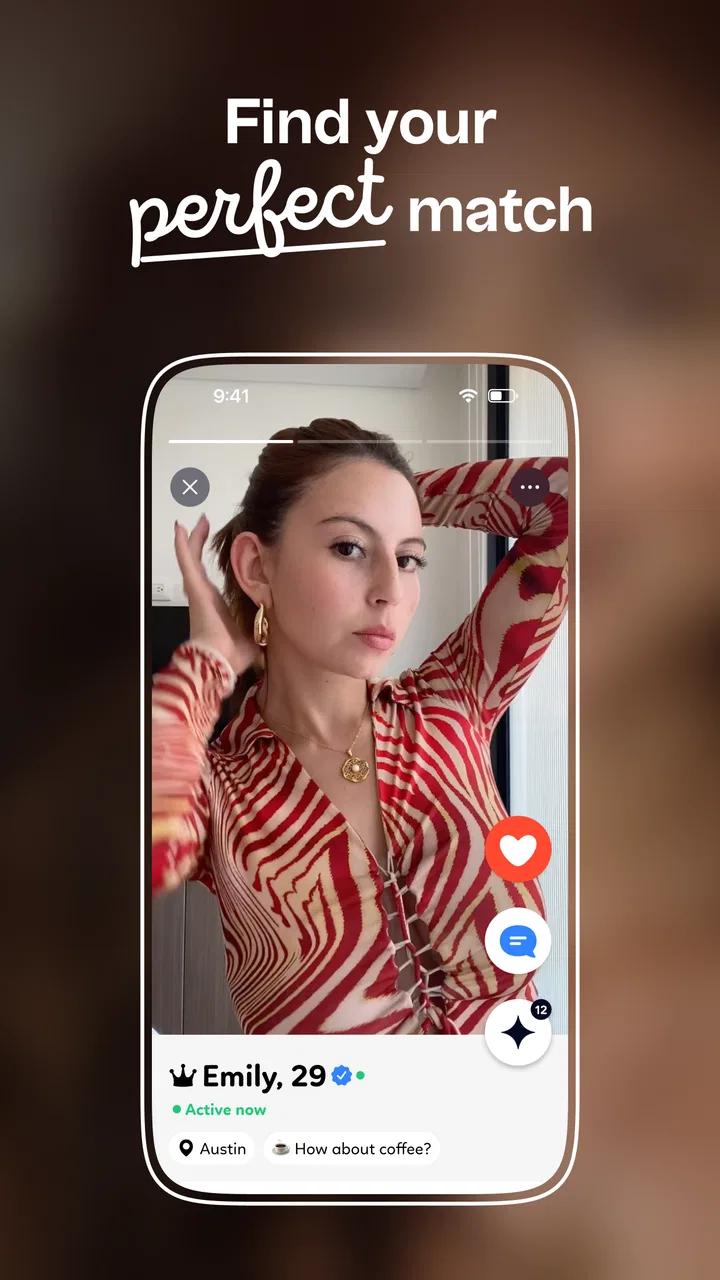
Kismia: Dating App & Chat
- 4.3
- Rating
- 10.00M
- Installs
- Free
- Price

 Analysis by App-foxy
I approached Kismia: Dating App & Chat as a practical tool for meeting people, not as a game of collecting matches. The app sits in the social category and is built around local dating, so its real value depends on how carefully you use discovery, conversation, and your own boundaries. After spending time with it, my view is that it can be useful for singles who want a direct route toward meeting nearby people, but it works best when you treat it as a process rather than a stream of instant romantic results.
The app is free to install, which makes trying the basic experience straightforward. It is intended for mature users aged seventeen and older, and optional purchases range from $0.99 to $239.99 per item. That price range is important to keep in mind before you become heavily invested in browsing or messaging. I would start with the free experience, learn how the app presents profiles and conversations, and only then decide whether any paid option genuinely improves the way I use it.
How I would build a reliable Kismia routine
I’d build a steady routine around small, intentional check-ins rather than leaving the app open whenever I have a spare moment. I’d decide what I’m hoping to learn from each session, then stop once I’ve answered messages and found a few people I genuinely want to know more about. That keeps Kismia useful without letting browsing crowd out the real-life plans I’m hoping it will help create.
You May Also Like

 Blood Strike: 2.5 Anniversary
Blood Strike’s Loadouts Turn Every Drop Into a Tactical Gamble
A close look at Blood Strike’s custom loadouts: how fast access to signature weapons reshapes its battle royale rhythm, rewards preparation, and narrows the gap between fights.

 Pandora - Music & Podcasts
Pandora’s Music Is Easy to Start, but Harder to Recover
Pandora’s strength is its low-effort path from a seed to a station. Its weak spot is how much confidence it asks you to place in connection, setup, and quiet recovery.

 8 Ball Pool
 Is Built on Rivalries, Rematches, and Routine
A close look at the rivalries, rematches, shared routines, and unanswered safety questions that turn a quick pool match into a persistent mobile community.

 Samsung Music
’s Quiet Strength Is Playing What You Already Own
Its reach comes less from spectacle than from dependable access to a personal library. That simplicity is both the app’s strongest retention engine and its ceiling.

 AccuWeather: Weather Radar
AccuWeather Review: A Quick, Clear Forecast for Everyday Decisions
For everyday plans, the best forecast is the one you can understand quickly. AccuWeather makes rain timing, radar, and local conditions easy to act on, with a few trade-offs.

 Hill Climb Racing
Why Hill Climb Racing Still Turns Crashes Into One More Run
A tiny car, a bumpy hill and one more upgrade: Hill Climb Racing keeps resurfacing because its simple chaos makes every near-miss feel personal.
More From Our News Desk



The baseline workflow: profile first, browsing second
My first recommendation is not to rush into swiping or sending messages. A dating app gives other people very little information at the beginning, so a thin profile creates unnecessary uncertainty. I would use a clear main photo, add enough personal detail to suggest what kind of conversation I enjoy, and make my expectations readable without turning the profile into a list of demands.
This matters especially in a local dating app. When people may be close enough to meet in person, vague profiles can lead to mismatched expectations quickly. A short description that mentions a couple of genuine interests is more useful than a polished but empty statement. I would also avoid writing as though every conversation must become a date. That can make the profile feel pressured before anyone has exchanged a message.
Once the profile is ready, I would browse in short sessions instead of endlessly checking the app. The goal is to notice people who seem compatible, not to treat every profile as an obligation to act. If someone catches my attention, I would look for a specific detail to mention in the first message. A simple reference to an interest or prompt gives the other person something to answer and makes the conversation less interchangeable.
My preferred rhythm would be to send fewer, more considered messages and then give people room to reply. Sending a large batch of generic greetings may feel productive, but it usually creates a crowded inbox with little real direction. A smaller number of conversations is easier to remember, easier to assess, and less likely to turn into a tiring routine.
What a normal day with the app looks like
Imagine I have a busy workday and only a few minutes free in the evening. I might open the app, review a handful of nearby profiles, respond to one ongoing conversation, and leave before browsing becomes automatic. If a conversation feels comfortable, I would move toward a practical question: whether both people are looking for something casual, a relationship, or simply an initial chat.
That small habit prevents one of the most common dating-app problems: spending more time managing possibilities than getting to know anyone. Kismia is most useful when it helps me make a clear next decision. That decision could be continuing a conversation, politely ending it, or suggesting a public meeting after enough comfortable interaction. It does not need to produce a date every time I open it.
For a first meeting, I would keep the plan simple and public, tell a trusted person where I am going, and avoid sharing sensitive information too early. These are not special tricks for this particular service; they are sensible habits whenever an online conversation moves toward an offline meeting. The local focus can make arranging a convenient meeting easier, but convenience should never replace basic caution.
Settings and account choices worth checking early
I would spend a few minutes reviewing the account and discovery controls before becoming active. The exact choices available can depend on the current app build and account context, so I would read each option rather than assuming that a familiar dating-app setting works the same way here. Check who you want to encounter, how much personal information is visible, and whether the profile still represents what you are comfortable sharing.
Location deserves particular attention. A nearby-dating service is useful because distance can make a real meeting more realistic, but location also makes privacy more sensitive. I would avoid putting an exact home address, workplace details, or a predictable daily schedule in my profile. Describing a general area is usually enough to establish local compatibility without making my routine easy to track.
Notifications are another setting I would manage immediately. Dating alerts can pull attention away from work, sleep, or time with friends, and constant interruptions can make conversations feel more urgent than they really are. I prefer notifications that let me respond at a deliberate time. If the app offers separate controls for conversation activity and promotional messages, I would keep the useful alerts and reduce the rest.
I would also look carefully at any purchase-related screens. Because the app includes in-app purchases, it is worth knowing when an action is part of the free experience and when it leads toward a paid item. I would never buy simply because a prompt appears while I am emotionally invested in a promising conversation. A short pause makes it easier to judge whether the purchase solves a real problem or only encourages more browsing.
Another useful check is the profile itself after the first few days. I would reread it as if I were a stranger. Does it explain enough to start a conversation? Does it accidentally reveal too much? Does it suggest a lifestyle or intention that I cannot realistically maintain? A profile is not finished forever; adjusting it after seeing how people respond can make the whole experience more honest.
Faster patterns that make conversations less tiring
The fastest useful pattern is not a shortcut button. It is a repeatable decision process. I would divide profiles into three groups: people I genuinely want to contact, people I might consider after more information, and people who are clearly not a fit. This prevents me from spending equal attention on every profile and keeps browsing from becoming an endless comparison exercise.
For promising matches, I would use a three-step conversation pattern. First, mention something specific from the profile. Second, add a small piece of information about myself so the exchange does not feel like an interview. Third, ask an open but easy question. For example, instead of asking only whether someone likes travel, I might mention a place I enjoyed and ask what kind of trip they prefer. The point is to create a natural opening, not to perform a perfect line.
I would avoid moving too quickly into personal contact details. Staying inside the app at the beginning gives me time to notice whether the person is consistent, respectful, and willing to hold a normal conversation. If somebody tries to rush the exchange, asks for money, or reacts badly to a reasonable boundary, that is useful information. I would end the conversation and use the app’s available reporting or blocking controls if necessary.
A second efficient habit is to close inactive conversations instead of keeping them all open indefinitely. If the exchange has stopped and neither person is showing interest, I would let it go. This reduces mental clutter and makes it easier to notice the conversations that are actually developing. Dating apps can encourage the idea that every match has future potential, but in practice, attention is limited.
I would also separate curiosity from compatibility. A profile can be attractive or unusual without being suitable for me. Before suggesting a meeting, I would look for basic alignment in communication style, availability, distance, and expectations. That extra step may reduce the number of dates I arrange, but it improves the chance that a date feels comfortable rather than forced.
Where the app is strong, and where it creates friction
The clearest strength is its local focus. If I want to meet people who could realistically become part of my offline life, nearby discovery is more practical than browsing a huge, abstract pool. The app’s purpose is easy to understand, and the social category fits the experience: this is about people, conversation, and potential dates rather than entertainment or content consumption.
The scale is also reassuring for someone who does not want to join an empty service. Kismia has passed ten million installs, with an average rating of 4.3 from around 565 thousand ratings and about 6.5 thousand written reviews. Those figures suggest a substantial user base and a generally positive reception, although they cannot tell me whether the people I want to meet are active in my particular area. Local density matters more than a global install figure once I start using the app.
The main friction is that a large audience does not guarantee a smooth personal experience. I may still encounter profiles that are incomplete, conversations that disappear, or matches that do not share the same intentions. The app can help create opportunities, but it cannot remove the work of judging compatibility or the disappointment that comes with non-responses.
The free entry point is helpful, but the presence of optional purchases means I need to pay attention to my own spending behavior. The listed purchase range reaches $239.99 per item, which is a meaningful amount rather than a trivial add-on. I would set a personal limit before buying anything and ask whether I am paying to solve a specific obstacle. If I am purchasing mainly because I feel overlooked, I would stop and reconsider.
Advanced limits: what experienced users should remember
One limitation is that profile signals are always incomplete. Even a detailed description and a good conversation cannot confirm how someone behaves in person. I would use the app to decide whether a first meeting seems worth considering, not to convince myself that I already know the person. Keeping that distinction clear helps prevent both overconfidence and unnecessary suspicion.
Another limit is the tension between speed and safety. Local dating encourages quick plans, which can be convenient, but a fast transition from a first message to a private meeting leaves little time to notice warning signs. My own threshold would be based on the quality and consistency of the conversation, not on how long the profile has been visible. If the interaction feels rushed, I would slow it down.
I would also skip this app if I wanted a highly specialized dating community, a professional networking environment, or a service built around a narrow shared interest. Kismia is a broad social dating option, so people looking for a very specific matching philosophy may prefer an alternative designed around that priority. Likewise, anyone uncomfortable with location-oriented discovery should choose a service whose structure gives them more control over distance and visibility.
Compared with meeting through friends, Kismia offers a wider starting pool and makes romantic intent more explicit, but it lacks the trust that a personal introduction can provide. Compared with more entertainment-heavy dating apps, its local purpose feels more direct, yet directness can also make mismatches noticeable sooner. Compared with niche services, it may offer broader possibilities while giving me fewer built-in reasons to assume compatibility.
The current version is 2.5.15 and supports devices running Android 8.0 or later. I would keep the app updated through the normal store process, especially for a service involving conversations and personal information. The developer is Kismia Group, and the mature age classification is a reminder that the app is intended for adult-oriented dating interactions rather than general social browsing.
Small habits that improve the outcome
I would take screenshots of nothing sensitive and save no unnecessary personal details from other people. Instead, I would rely on the conversation itself and keep my own notes, if any, general and respectful. This may sound minor, but it prevents a dating routine from turning into a private database of strangers.
I would also decide in advance what a successful week means. It might mean having two enjoyable conversations, learning that a certain type of profile is not right for me, or arranging one safe first meeting. Measuring success only by matches encourages compulsive use. Measuring it by the quality of decisions gives the app a more useful role in everyday life.
When a conversation becomes repetitive, I would change the type of question rather than sending more messages. Asking about a typical weekend, a recent small pleasure, or what makes a good first date can reveal more than a long checklist of facts. If the other person never asks anything back, I would treat that imbalance as a reason to step away, not as a challenge to work harder.
Finally, I would review my own boundaries after every offline interaction. Did I feel listened to? Was the meeting arranged in a way that felt safe? Did the person respect the pace we had discussed? These questions help me judge the quality of the service in real use, because the important outcome is not simply opening a chat; it is whether the path from chat to real life remains comfortable and respectful.
My verdict for different kinds of users
I would recommend Kismia to a single person who wants a straightforward way to discover nearby dating possibilities and is prepared to put effort into profile quality and conversation. It is particularly suitable for someone who prefers local practicality over a highly specialized matching system. The free starting point makes experimentation reasonable, provided I keep the purchase options in perspective.
I would not recommend it to someone seeking guaranteed replies, instant relationship results, or a completely hands-off matching experience. It is also a poor fit for anyone who tends to overspend when a conversation feels promising, or who dislikes making careful decisions about privacy and first meetings. The app can open a door, but I still have to decide which doors are worth approaching.
After using it with a measured routine, I see the strongest results coming from three habits: complete the profile before browsing seriously, control notifications and spending before emotions take over, and move conversations forward only when the interaction shows mutual effort. Those habits are more valuable than trying to maximize every possible match.
My final take is that Kismia is a capable local dating app when used deliberately. Its broad reach, clear purpose, and accessible starting point make it worth trying for mature singles who want real-world possibilities nearby. I would keep expectations realistic, protect my personal information, and treat every conversation as an opportunity to assess mutual respect rather than as a promise of a date.
FAQs for Kismia: Dating App & Chat
01What is Kismia: Dating App & Chat used for?
Kismia is a dating and social discovery app designed to help adults meet new people, start conversations, and potentially build romantic relationships. After creating a profile, you can browse suggested members, view photos and personal details, send messages, and interact with people who match your interests. The quality of your experience depends largely on how complete and genuine your profile is, as well as how actively you communicate with other users.
02Is Kismia free to download and use?
Kismia can generally be downloaded for free, but some features may require in-app credits, a subscription, or another form of payment. Basic profile browsing and limited interactions may be available without paying, while messaging, contacting certain members, or unlocking additional features can involve charges. Before purchasing anything, review the current prices, renewal terms, and payment conditions shown in the app store or inside the application.
03Is Kismia safe for meeting and chatting with other users?
Kismia may provide reporting, blocking, and profile-management tools, but users should still take responsibility for their own safety. Avoid sharing your home address, financial information, passwords, or identity documents with strangers. Be cautious of users who quickly request money, make urgent claims, or refuse reasonable verification. Keep early conversations inside the app and arrange any first meeting in a busy public location.
04How do I create a good profile on Kismia?
A strong Kismia profile should include recent, clear photos and an honest description of your interests, lifestyle, and what you hope to find. Avoid using misleading images or exaggerated information, since authenticity helps attract more suitable matches and creates trust during conversations. Completing available profile fields can also improve recommendations and give other members useful topics to discuss when starting a chat.
05Can I delete my Kismia account and cancel payments?
You can usually manage your profile or request account deletion through the app’s settings, help section, or customer support options. Deleting the application from your phone does not necessarily cancel an active subscription, so payments must be stopped through the relevant Google Play or Apple App Store subscription settings. Check the cancellation policy carefully, particularly if you purchased credits or a recurring membership.
Pros
- Large international user base increases the chance of finding compatible matches.
- Detailed profiles make it easier to learn about people before starting a chat.
- In-app messaging keeps conversations organized without sharing your phone number.
- Profile discovery is simple and suitable for casual browsing.
- Available on mobile devices for convenient dating while traveling or commuting.
Cons
- Many useful features may require a paid subscription or in-app credits.
- Some profiles may appear inactive or respond inconsistently.
- International matching can create language and time-zone difficulties.
- Users may receive frequent notifications or promotional messages.
- As with any dating app
- fake profiles and romance scams remain possible.

Kismia: Dating App & Chat
Gallery